
Home >> Industrial & Innovative Design >> Interior Architectural Space Design >> Career Path: Exhibit & Experiential Design
Design Experiences People Will Remember
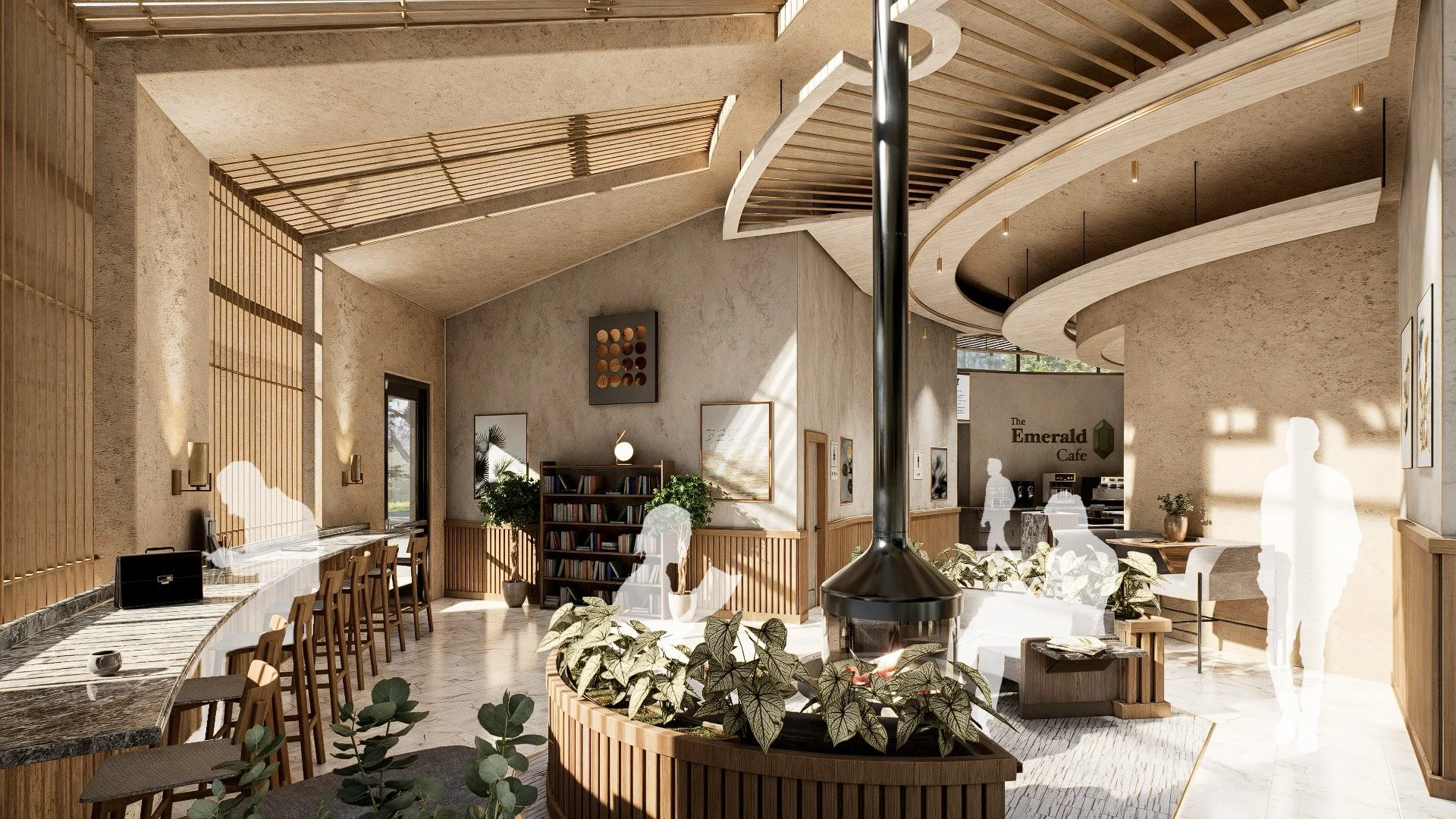
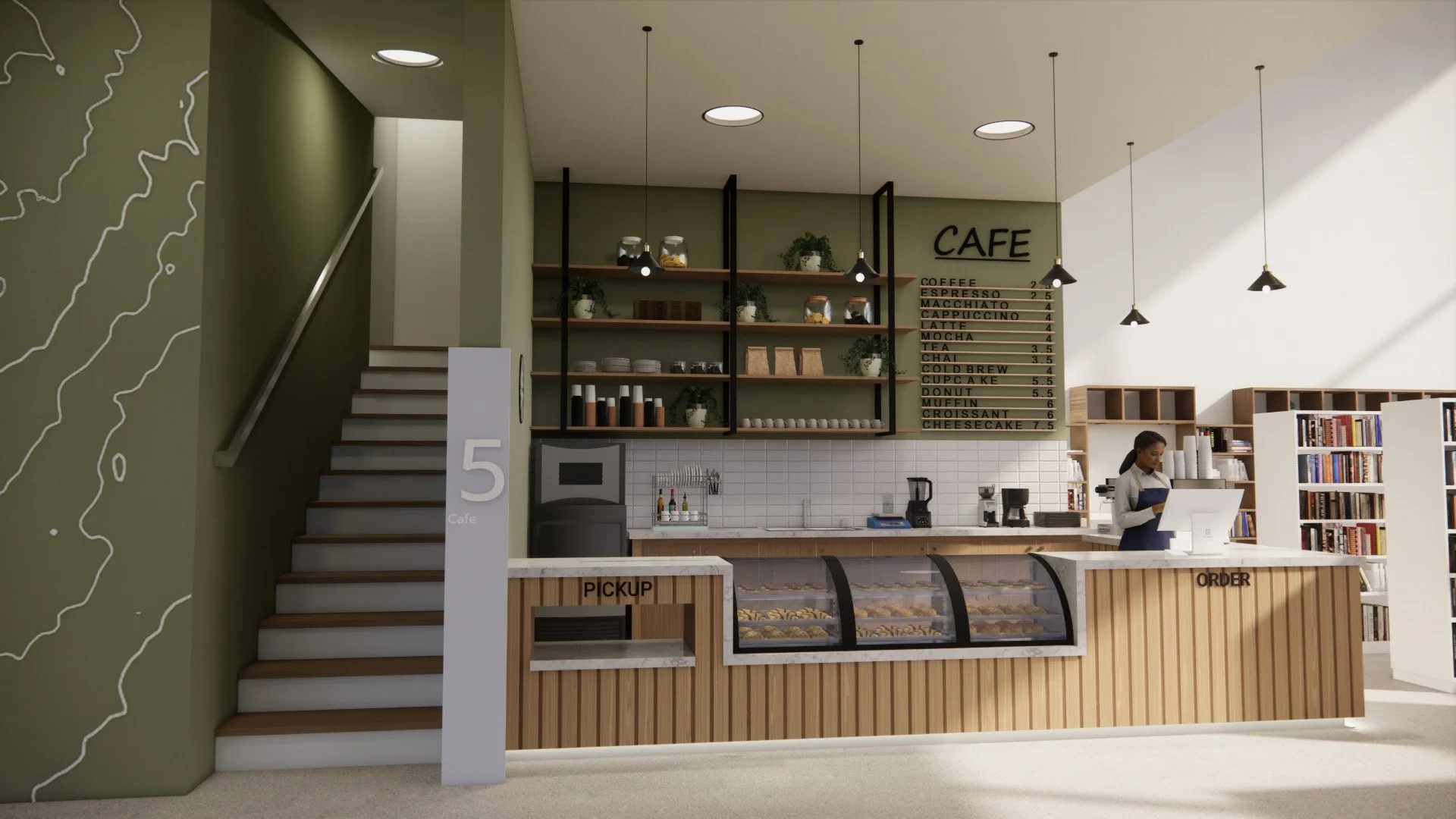
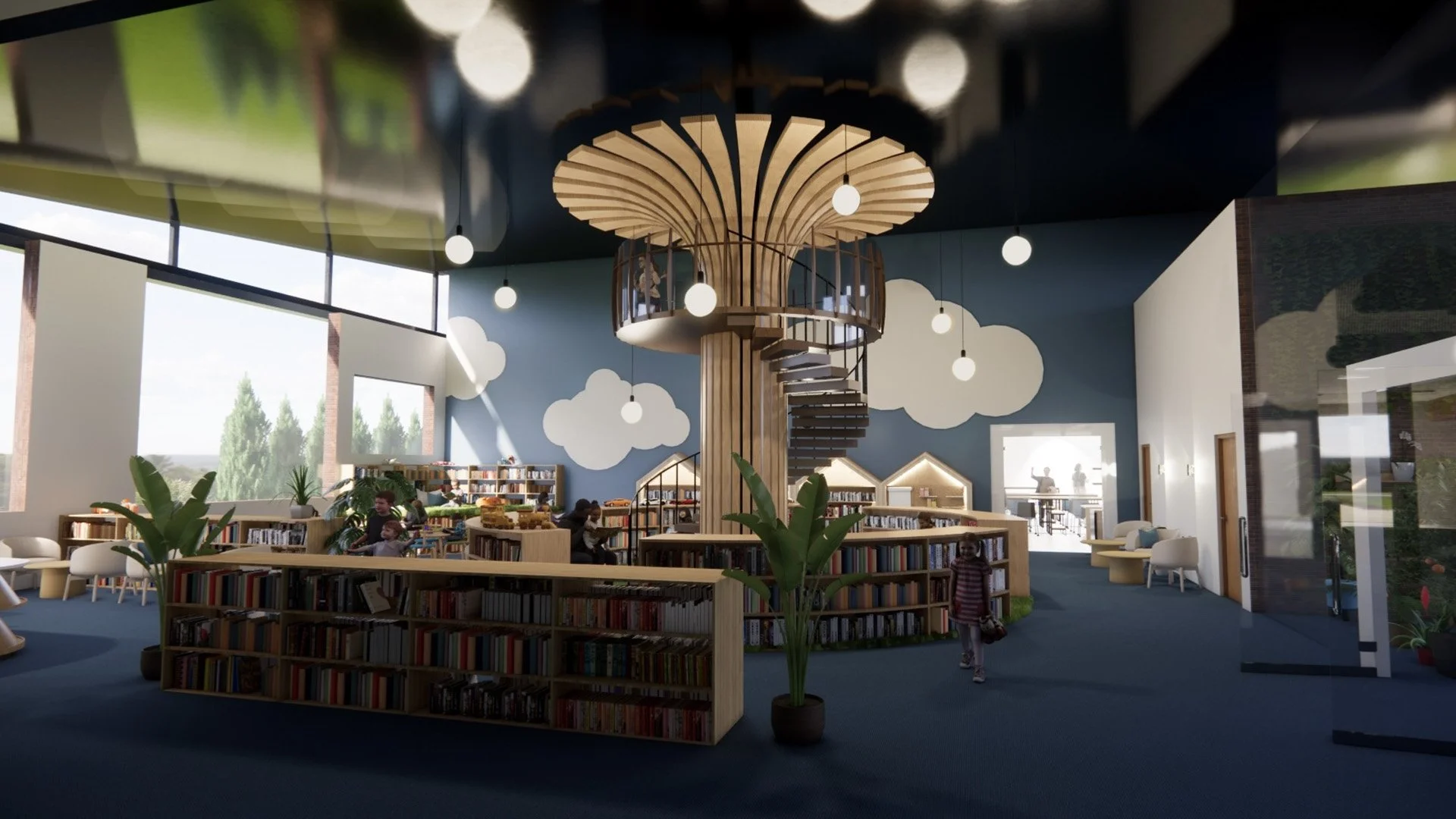
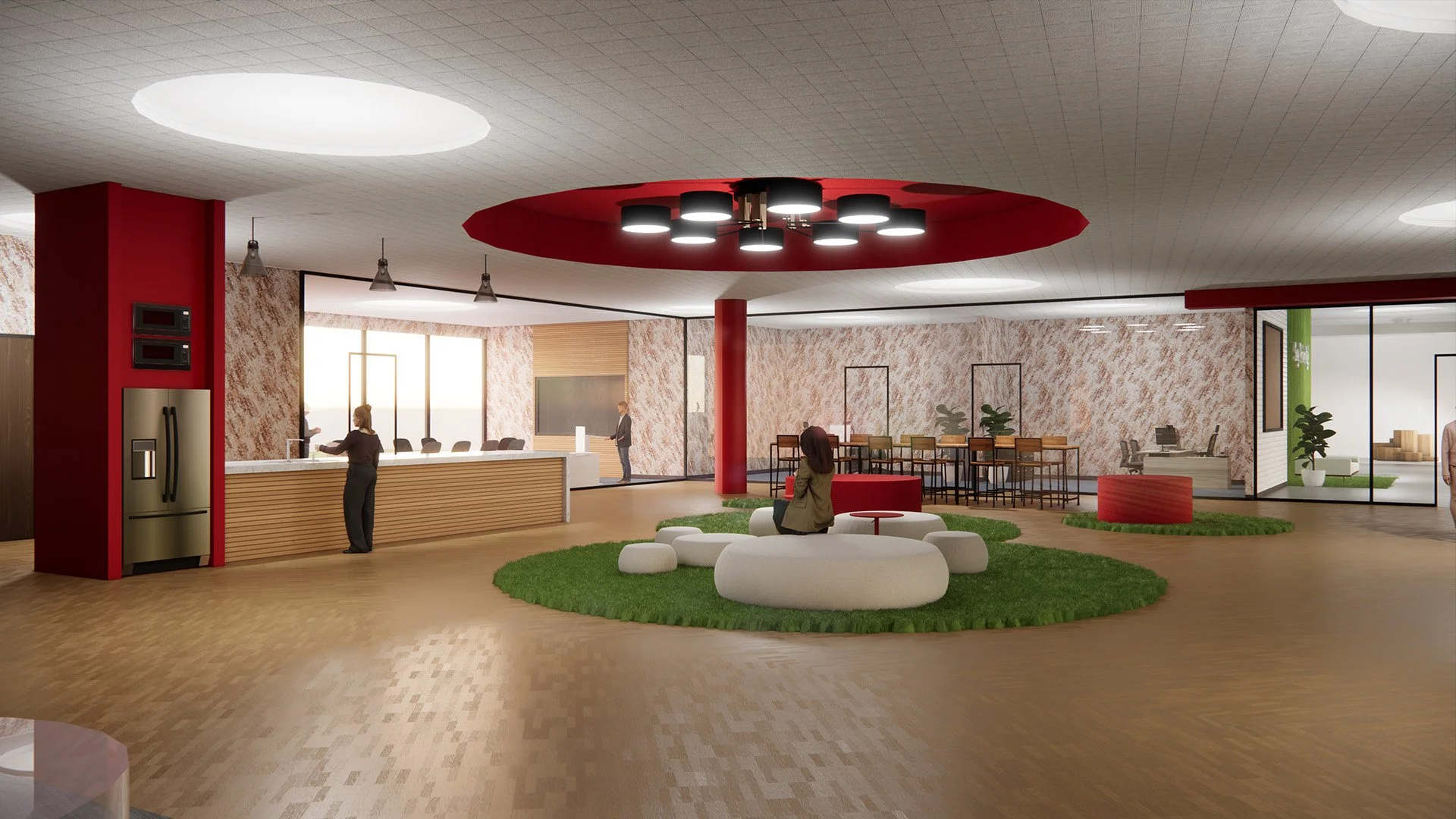
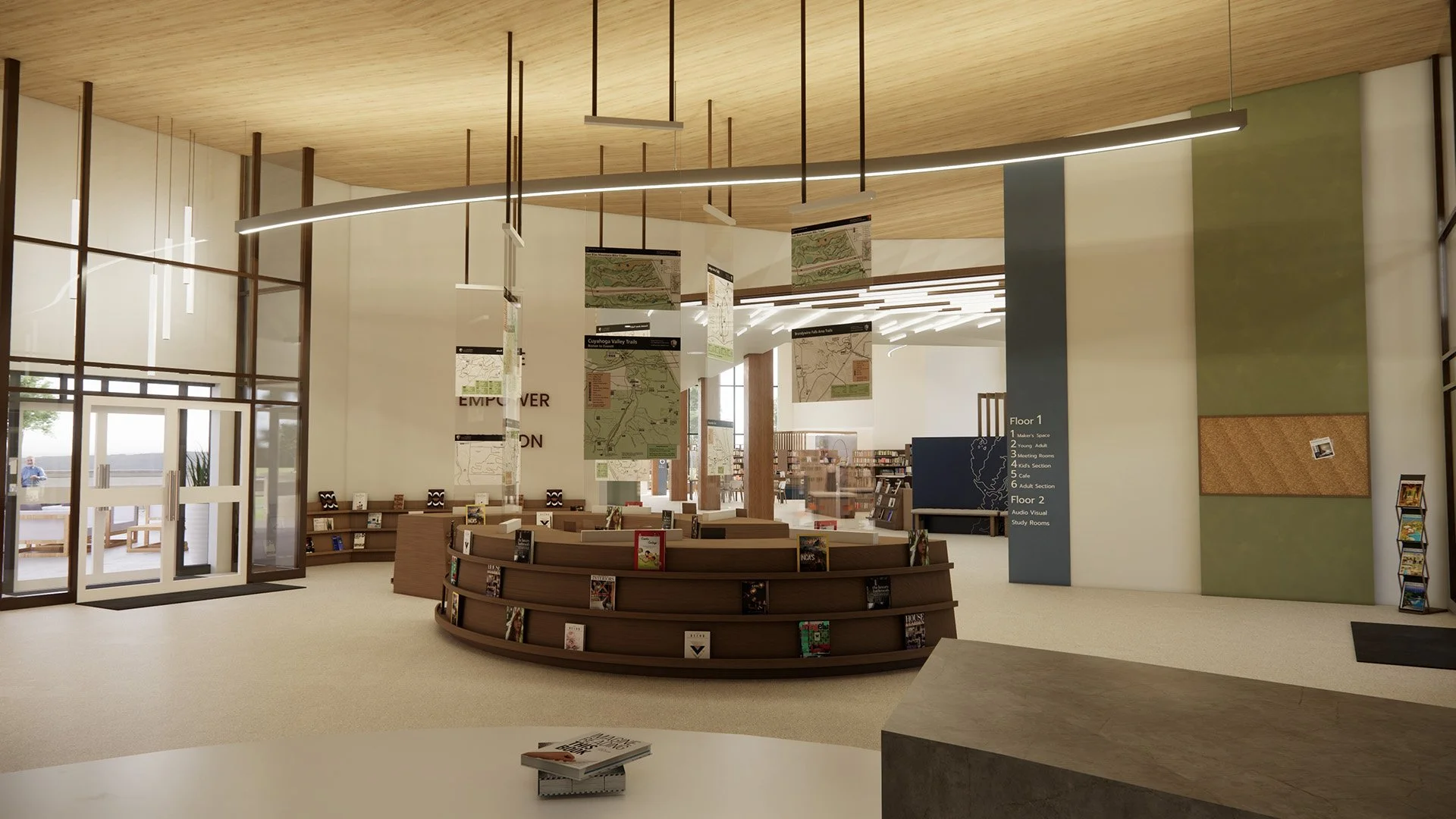
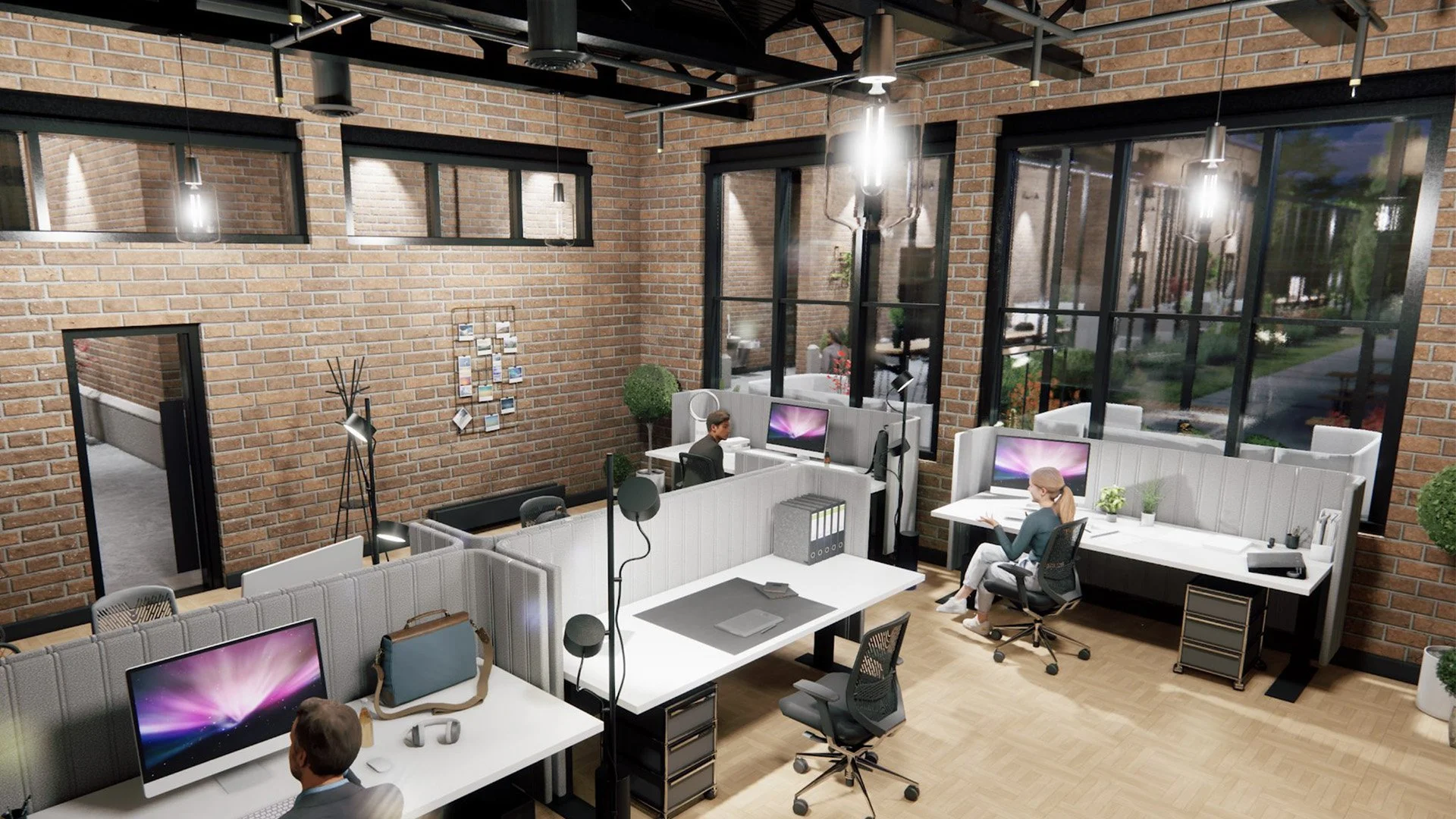
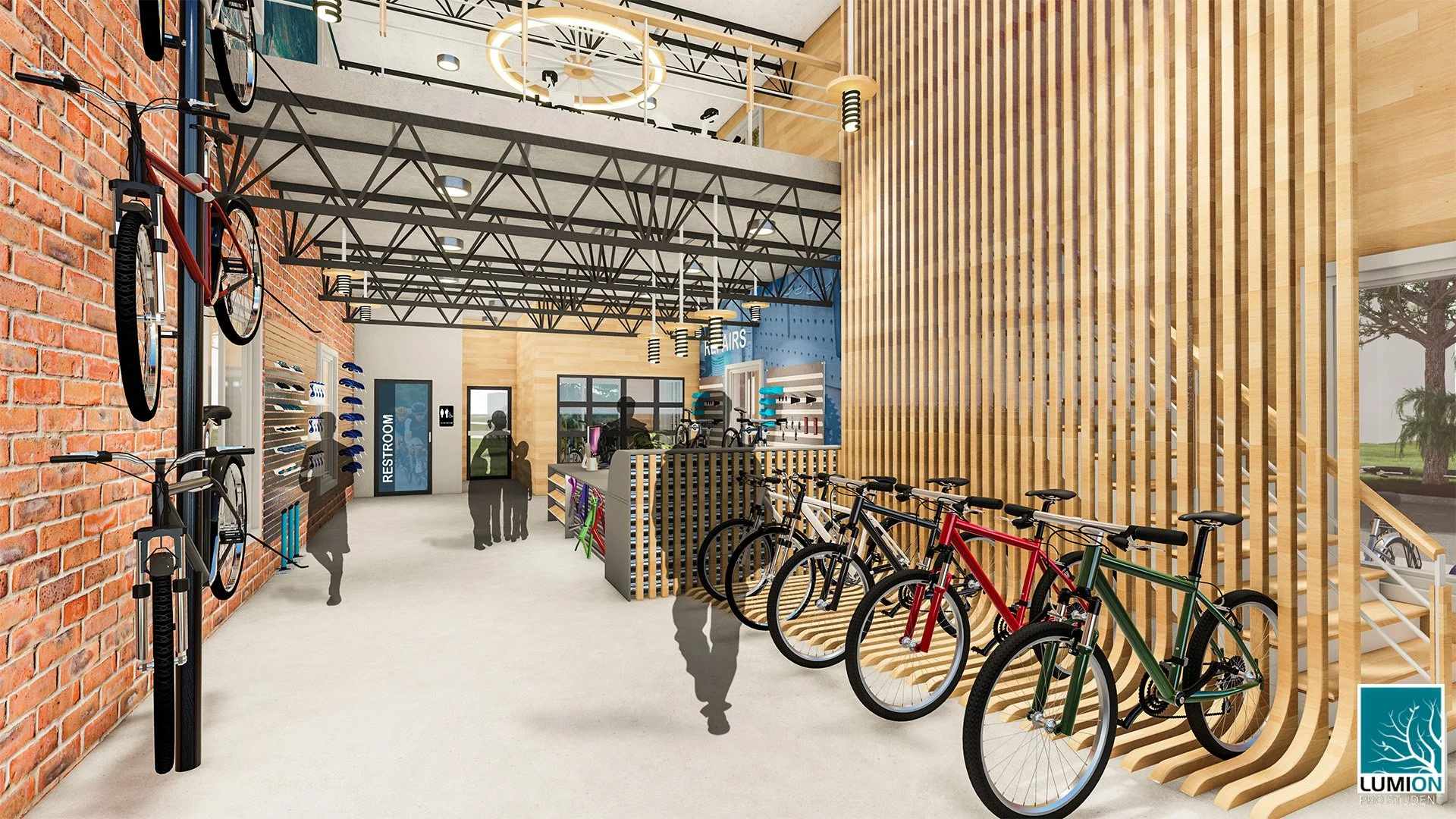

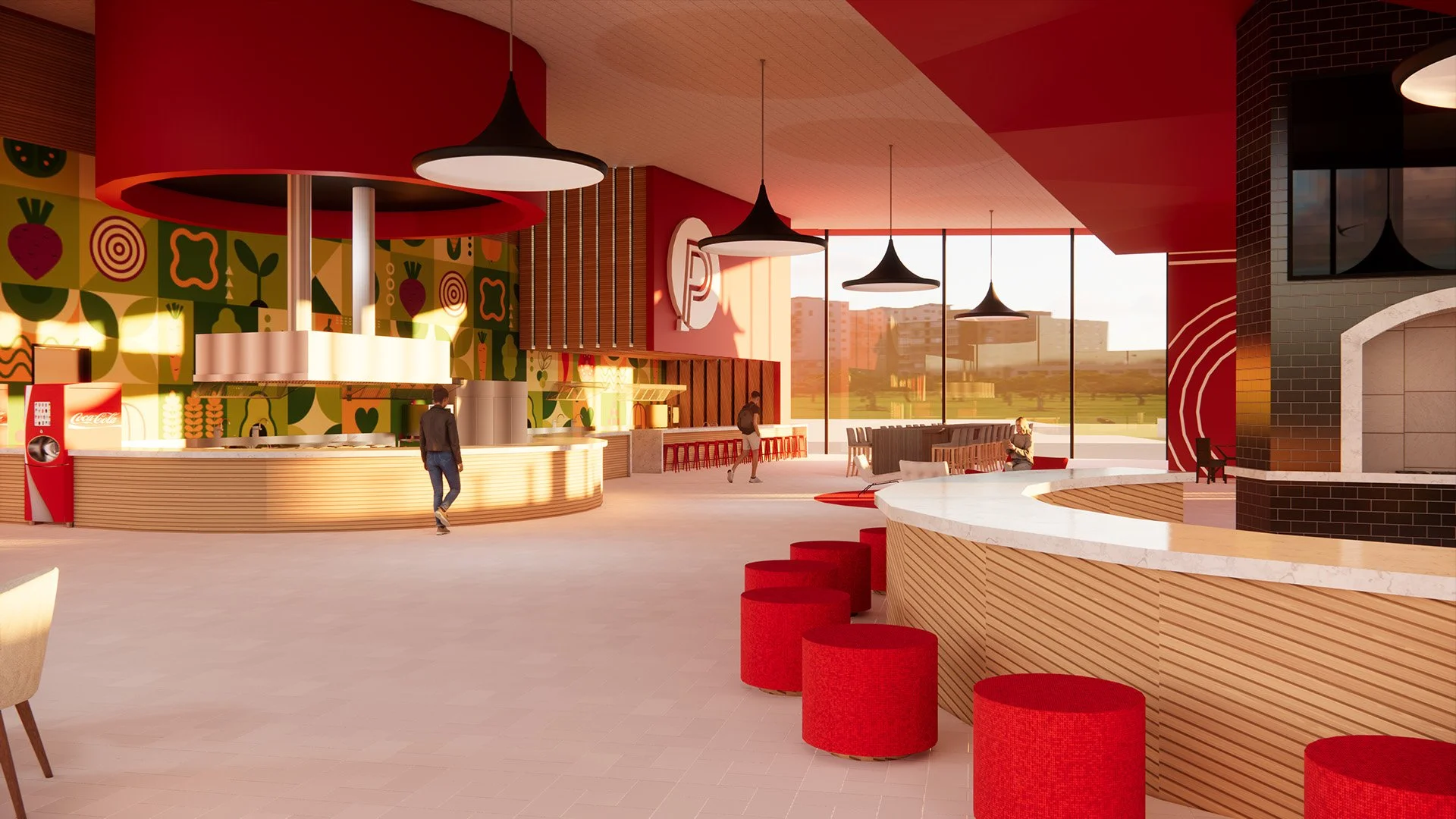
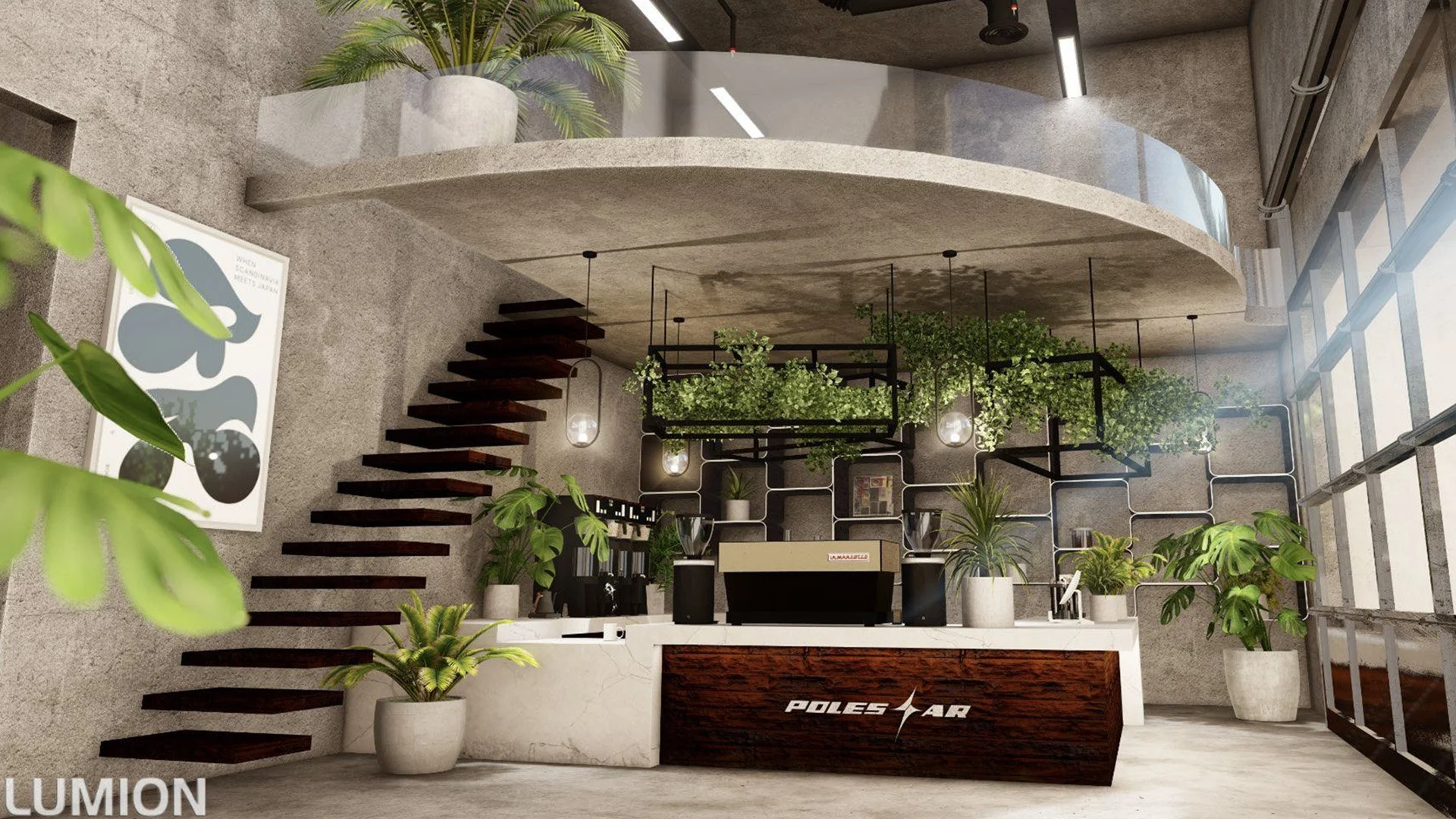
EXHIBIT & EXPERIENTIAL DESIGN
What if you could design something people don't just see—but actually experience?
Think about walking through an incredible museum exhibit.
Entering an immersive attraction that makes you feel transported somewhere else.
Discovering a company's newest technology at an interactive trade-show exhibit.
Or visiting an experience where space, objects, graphics, lighting, sound and technology all work together to tell a story.
Someone designed that experience.
Exhibit and experiential designers create physical environments that engage people, communicate ideas and create memorable experiences.
They combine industrial design, architectural space design, storytelling, graphics, technology and human-centered thinking to transform information and ideas into places people can enter, explore, touch and remember.
For students interested in art, architecture, museums, technology, storytelling, products, entertainment or making things, this can be an extraordinary career.
An Industrial and Innovative Design degree from Cedarville University, in partnership with the International Center for Creativity (ICC), prepares you for a career in Commercial & Workplace Design.
Student Project Gallery
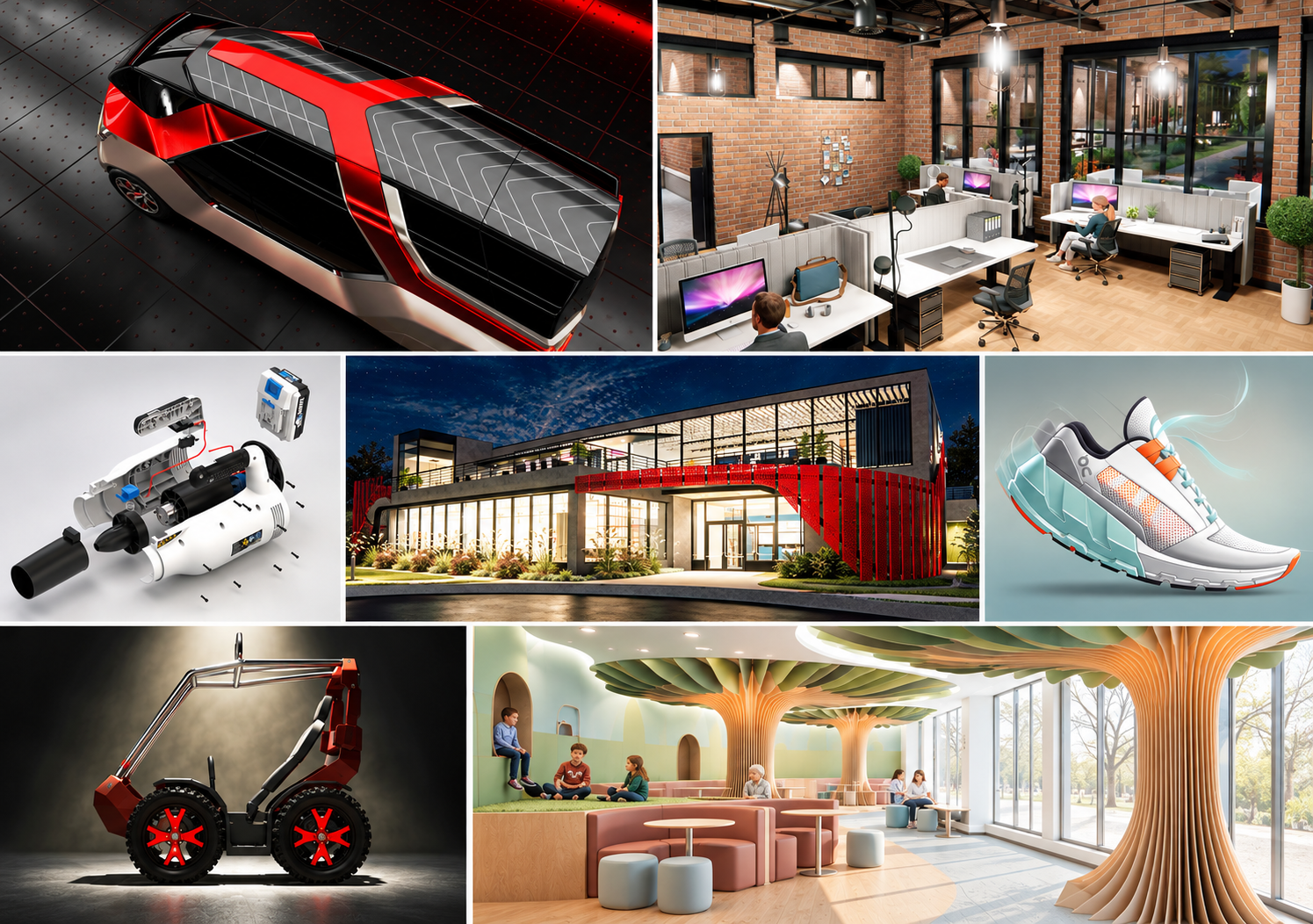
Throughout the academic year and during summer internships, students and staff at the International Center for Creativity (ICC) engage in hands-on design projects that bridge the gap between classroom learning and professional practice. Some projects are sponsored by industry partners, while others are carefully developed classroom experiences designed to replicate the challenges and expectations of the professional design world.
Each project follows a structured design process, beginning with a design brief and progressing through research, ideation, concept development, prototyping, and final presentation. With real deadlines, defined deliverables, and professional expectations, these experiences closely mirror the day-to-day responsibilities of an industrial designer—preparing students with the technical skills, creative problem-solving abilities, and professional confidence needed to succeed in their careers.
Explore Student Projects to discover not only the final design solutions, but also the creative thinking, exploration, and iterative process that brought them to life.
Senior Capstone Spotlight
Senior students in the Industrial and Innovative Design major bring together their acquired skills, creativity, and problem-solving abilities through a semester-long capstone project. These projects challenge students to explore a diverse range of design opportunities, applying research, human-centered design principles, and innovative thinking to develop thoughtful solutions to real-world challenges.
The video above showcases Aaron Cox’s senior capstone project, The Emerald Café: A Community Hub for Connection and Productivity. This project demonstrates how thoughtful interior and architectural space design can bring people together, foster collaboration, and create an inviting environment that balances social interaction with productivity.
Real-World Projects. Real-World Experience.
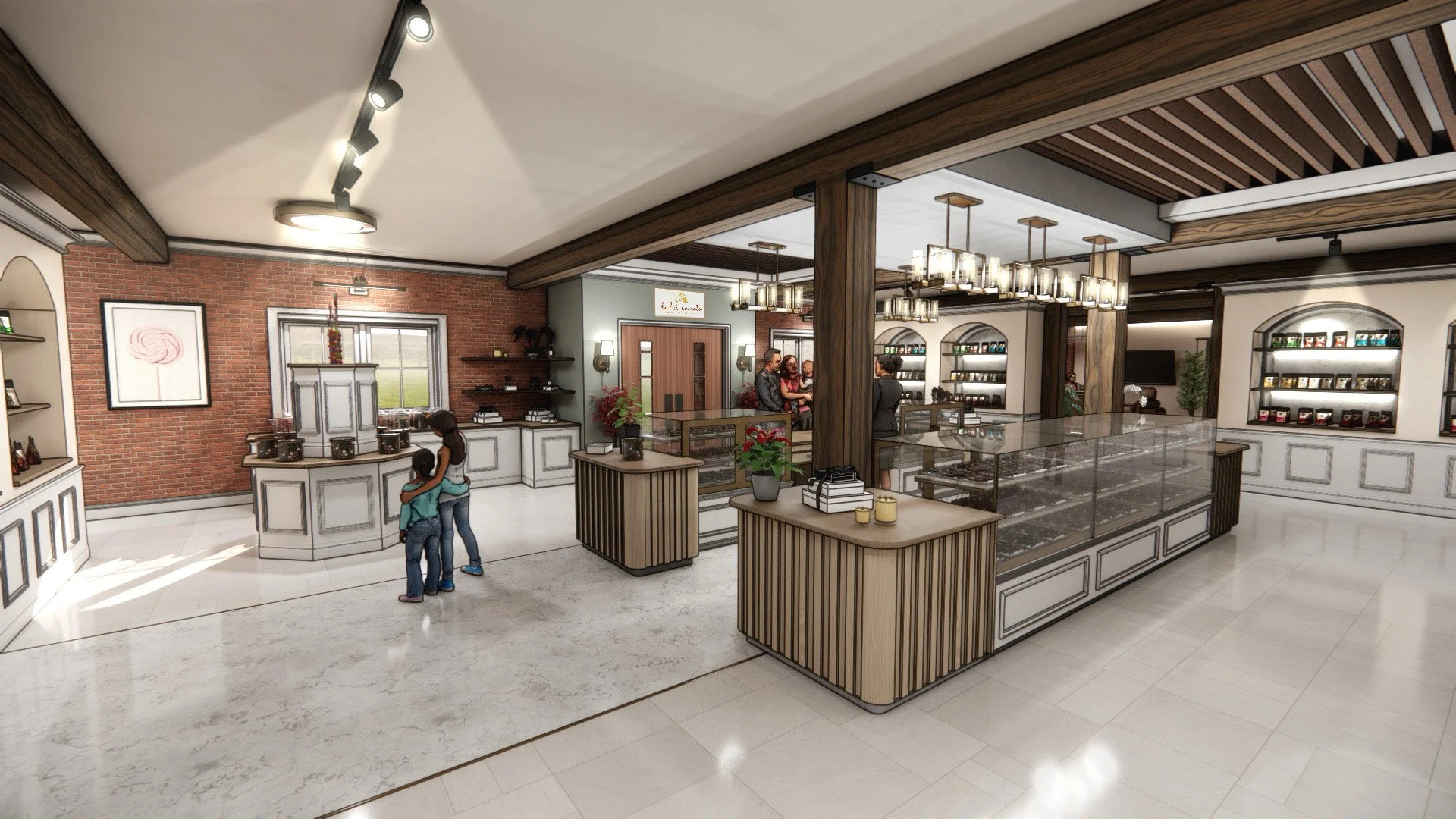
At the International Center for Creativity (ICC), experiential learning goes beyond the classroom. Students collaborate with real businesses and organizations to tackle authentic design challenges, gaining valuable hands-on experience while developing creative solutions that make a meaningful impact.
One example is ICC’s project with Dulci Sweets in Ashland, Ohio, where senior Industrial and Innovative Design students explored architectural spaces, interior design, and customer experiences to help shape a local business expansion and contribute to community revitalization.
Read the Full Story: Dulci Sweets’ Expansion Helps Revitalize Ashland
ICC Grad Talk
Where are they now? Catch up with ICC graduates and discover where their creativity has taken them. These videos highlight their careers, accomplishments, and experiences since graduation—and offer a glimpse into the many paths an ICC education can inspire.
In this interview, Alyssa (Vandegrift) Hawkins shares insights from her work as the director of graphics at Hub+Weber Architects. She discusses best practices for rendering composition, the software tools she uses in her workflow, and several recent architectural projects she has contributed to. Alyssa also offers practical advice and encouragement for current students preparing to enter the architectural design industry.
Two Campuses. One Exceptional Student Experience.

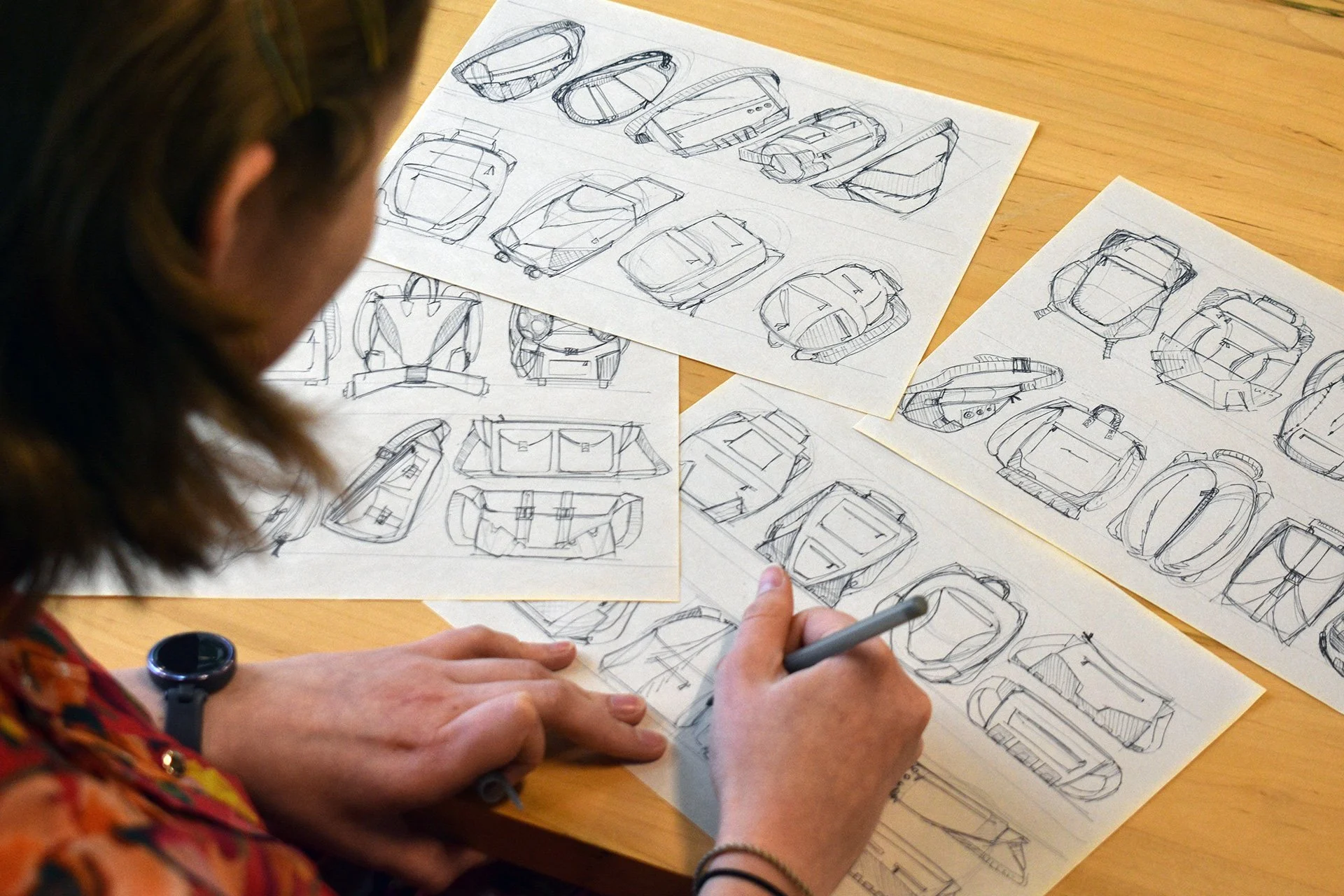
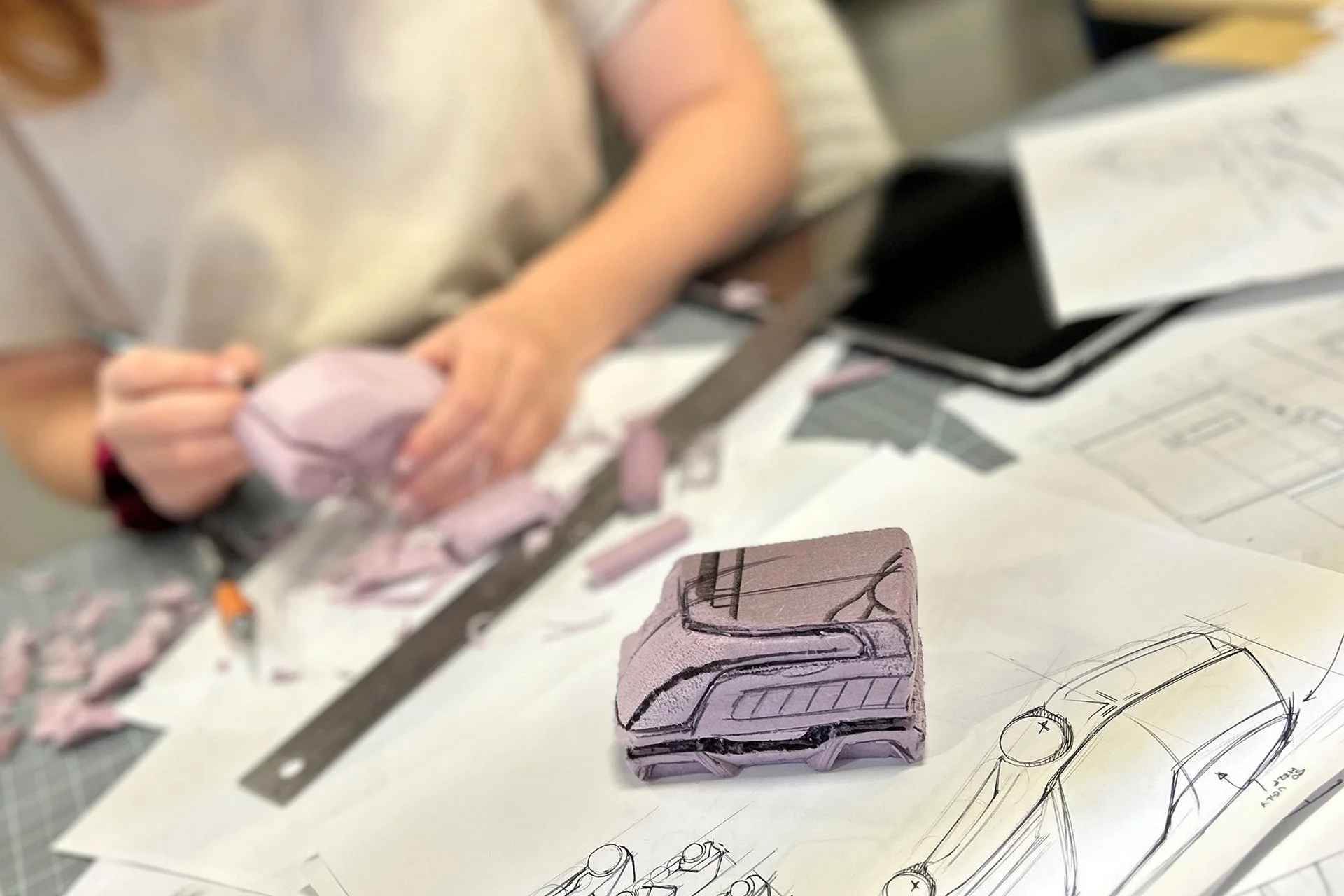
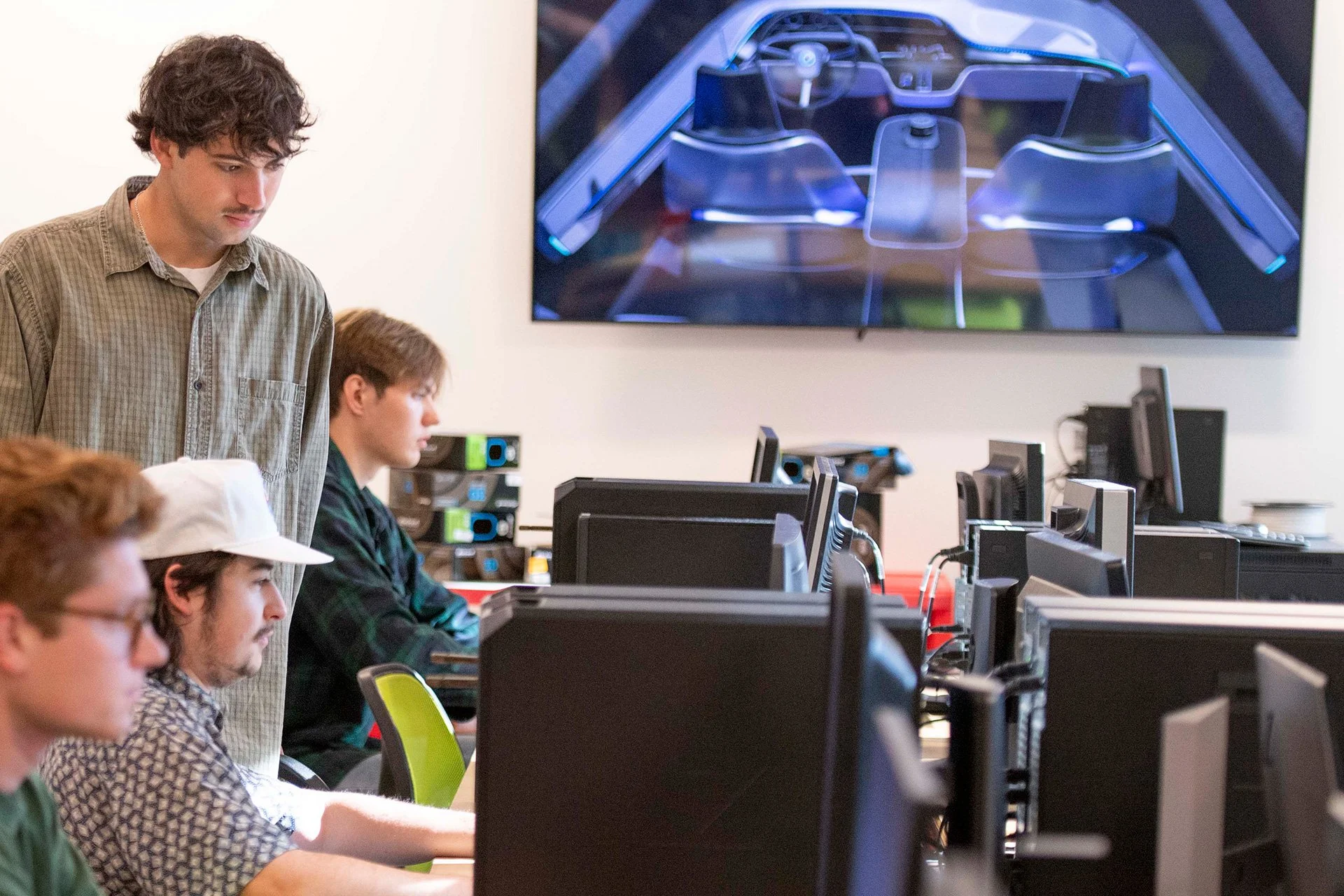
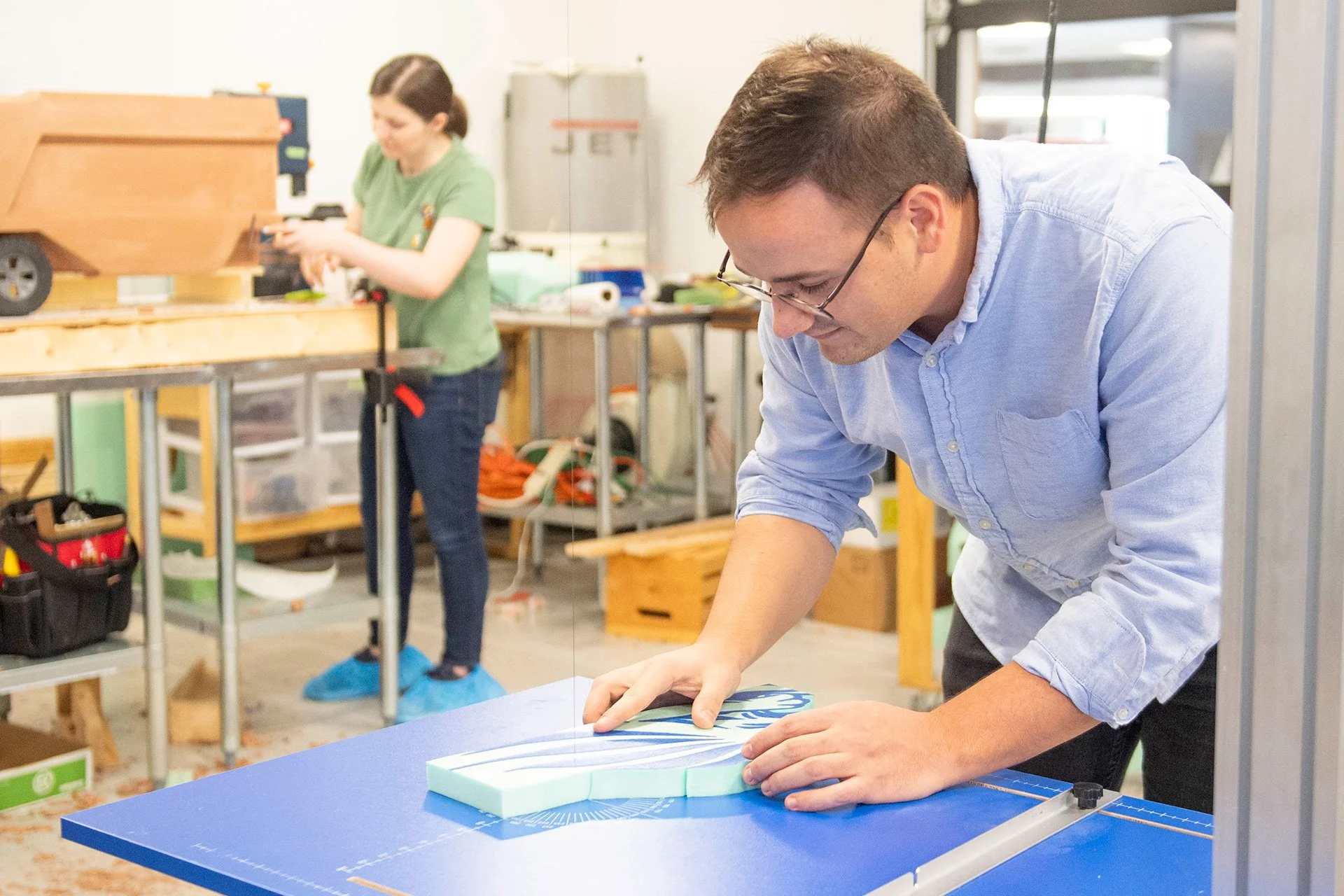
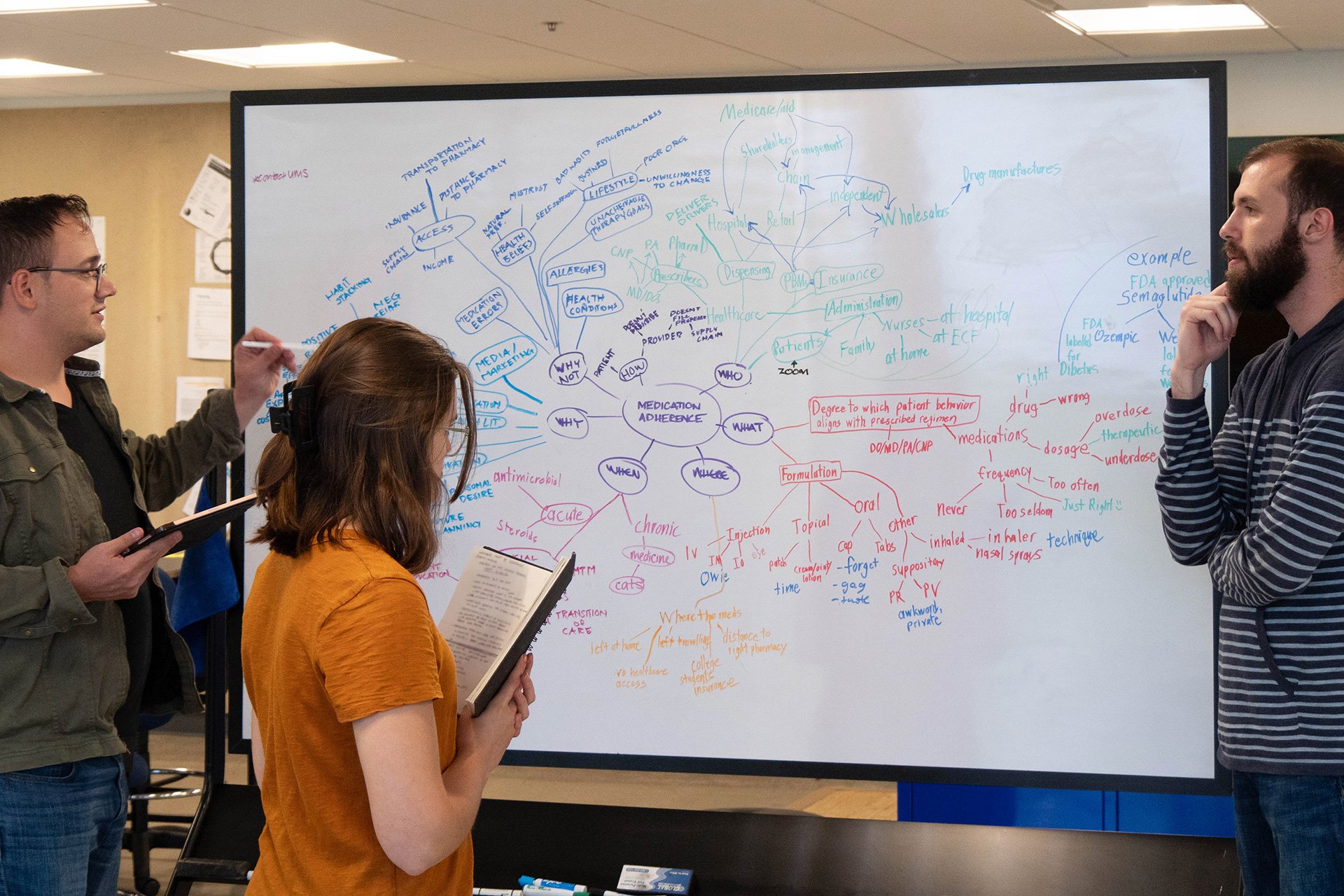
Students in the Industrial and Innovative Design program enjoy the best of both worlds through a unique four-year college experience. The first two years are spent on Cedarville University's campus in Cedarville, Ohio, building a strong academic foundation while enjoying traditional college life and a vibrant campus community. The final two years take place at the ICC Innovation Campus in Dublin, Ohio, where students immerse themselves in a collaborative, studio-based learning environment focused on creativity, innovation, and real-world design challenges.
Together, these two distinct experiences offer an exceptional blend of campus life, meaningful relationships, hands-on learning, and professional preparation.

Discover Where Our Graduates Are Making an Impact
From innovative startups to leading companies across a wide range of industries, ICC graduates are putting their creativity and design skills to work. Connect with our students and alumni on LinkedIn to explore their career journeys, discover the exciting places they're working, and see how they're impacting the world.
Simply search for “International Center for Creativity” on LinkedIn or visit our company page to connect with our community and discover where an ICC education can take you.
Explore the International Center for Creativity on LinkedIn →
What kinds of places could you design?
Exhibit and experiential designers work almost anywhere an organization wants people to encounter a story, idea, product or brand.
That can include:
Museums • science centers • history centers • children's museums • corporate visitor centers • trade-show exhibits • convention experiences • traveling exhibitions • brand experience centers • product-launch environments • interactive exhibits • cultural attractions • zoos and aquariums • theme parks • churches and ministry attractions • university exhibits • sports halls of fame • historic sites • visitor centers • pop-up experiences • corporate showrooms • immersive entertainment
Some projects are permanent.
Others may exist for only a few days.
A designer might create an interactive museum gallery one year and a temporary international trade-show experience the next.
They may work for exhibit-design firms, experiential-design consultancies, museums, architectural firms, branding agencies, trade-show companies, attractions, corporations, fabricators, entertainment companies or nonprofit organizations.
Some ultimately create their own studios or specialized design businesses.
What Does an Exhibit & Experiential Designer Actually Do?
Imagine you're asked to create an exhibit about the first astronauts to walk on the moon.
Where do you begin?
Not with the display case.
You begin with the experience.
What should visitors discover?
What should they see first?
What story should unfold as they move through the space?
What objects should they touch?
What should children be able to interact with?
Where should visitors stop?
What should they hear?
How could technology make the story more engaging without overwhelming it?
And most importantly:
What should someone remember after they leave?
The answers might become sketches, storyboards, floor plans, models, interactive prototypes, digital experiences, graphics, displays, lighting concepts and immersive environments.
That's why experiential design is so multidisciplinary.
You're not simply designing a room.
You're designing what happens to someone inside it.
The Experiential Designer's Toolkit
Experiential designers need an unusually broad creative toolkit.
Hard skills can include design research, rapid sketching and ideation, perspective drawing, storytelling and storyboarding, space planning, visitor-flow mapping, 2D and 3D CAD, digital modeling, rendering and visualization, exhibit and display design, fixture design, materials and finishes, graphics and wayfinding, lighting concepts, prototyping, modelmaking, interactive design and presentation development.
Depending upon their role, designers may work with tools such as Revit, AutoCAD, SketchUp, SolidWorks, Adobe Creative Cloud, digital drawing applications, rendering software, 3D printers, VR/AR tools, interactive media and AI-assisted visualization platforms.
But technology is only part of the profession.
Experiential designers also need strong curiosity, empathy, observation, communication, collaboration, storytelling, creative problem-solving, presentation, adaptability, organization and teamwork.
A single museum project might involve architects, industrial designers, graphic designers, historians, educators, writers, lighting designers, fabricators, programmers, engineers and museum curators.
The experiential designer needs to understand how all of those pieces become one coherent experience.
How Is AI Changing Exhibit & Experiential Design?
AI is expanding the creative possibilities of experiential design.
Designers can use AI to help research subjects, organize information, develop story directions, rapidly visualize concepts, explore alternative environments, generate early mood studies and communicate ideas before committing substantial resources to development.
Imagine designing an exhibit about ancient Rome.
AI-assisted visualization could help a team rapidly explore several completely different environmental approaches early in the project.
Generative tools might also help designers explore dozens of visual or spatial possibilities instead of immediately settling on the first idea.
AI can increasingly contribute to the experience itself, too. Interactive environments can respond to visitors, personalize content, interpret information or create experiences that change according to how people engage with them.
But AI doesn't understand the most important question:
What should the visitor experience?
AI can generate an image.
It can suggest possibilities.
It can accelerate production.
But someone still has to understand the audience, determine the story, establish the hierarchy, make aesthetic decisions, understand physical constraints and decide what deserves to become real.
Tomorrow's best experiential designers will combine AI fluency with storytelling, human insight and creative judgment.
Why ICC + Cedarville?
Because experiences don't fit neatly into one design discipline.
Consider a museum exhibit.
It might include:
People + Space + Products + Displays + Graphics + Lighting + Technology + Information + Sound + Movement + Story + Emotion
That's exactly why Industrial & Innovative Design provides such a powerful foundation.
ICC students study consumer product design, transportation design, architectural interior space design and architectural exterior space design, while also developing capabilities in design thinking, consumer insights, rapid ideation, prototyping, 3D CAD, innovation and entrepreneurship, professional practices, storytelling and presentations.
That breadth is particularly valuable in experiential design.
A designer might need to conceptualize the space and the exhibit fixture inside it.
Design a physical interactive.
Consider graphics and information.
Prototype something visitors will touch.
Understand how people move through the environment.
And then create renderings and presentations convincing a client that the idea should actually be built.
Industrial designers are trained to connect those pieces.
ICC Already Has Connections to the Exhibit World
This isn't simply a theoretical career extension.
Cedarville specifically identifies architectural space design—both interior and exterior—as a major category of ICC student work and reports that ICC's industry relationships have included organizations such as Chick-fil-A and the Creation Museum. Those partnerships have allowed students to contribute design concepts, efficiency ideas and visual-presentation solutions.
That matters because experiential design lives at the intersection of physical space, storytelling, products and presentation.
ICC's own program description emphasizes that students are being prepared for the spaces where people “live, work, play and worship,” using design thinking, consumer research, rapid sketch ideation, prototyping, 3D CAD modeling and professional presentations.
Those are precisely the kinds of capabilities experiential-design firms need.
The Best of Two Worlds
The partnership between the International Center for Creativity and Cedarville University creates an educational experience that's difficult to duplicate.
Students begin at Cedarville University, experiencing the energy and community of a traditional residential Christian university — residence halls, friendships, athletics, student organizations, chapel, campus activities, academics and campus life.
Then Industrial & Innovative Design students transition to ICC's professional studios in Dublin, Ohio, for their junior and senior design years.
ICC itself describes the major as providing the “best of two worlds”: the first two years on Cedarville's vibrant main campus followed by immersion in professional design training in a real-world studio environment during the final two years.
It's the best of two worlds.
A vibrant, Christ-centered university experience + an immersive, career-intensive professional design education.
Students don't have to choose between a traditional college experience and specialized professional preparation.
They get both.
National Recognition. Exceptional Engagement.
Cedarville University has built a national reputation for combining rigorous academics, Christian community and unusually strong student engagement.
The Wall Street Journal ranked Cedarville No. 4 nationally for student engagement in its 2022 rankings, continuing a history of top-five engagement recognition. That kind of personal interaction with professors and classmates is particularly relevant in a studio education built around critique, collaboration and mentorship.
And in 2026, Education Insider named Cedarville University its Top Christian University, recognizing biblical integration, academic excellence and strong career outcomes. Among Cedarville's class of 2025, 98.3% were employed or enrolled in graduate school within six months of graduation.
ICC's Industrial & Innovative Design program has earned national recognition of its own.
The program was ranked No. 5 in College Values Online's 2025 ranking of bachelor's degrees in industrial design. Cedarville is the only Ohio university in the Top 10 and the only evangelical Christian institution represented, appearing alongside programs at institutions including Georgia Tech and Carnegie Mellon.
A nationally recognized Christian university + a nationally ranked professional design program.
That's a compelling combination.
Learn Design Where Design Happens
During their upper-level years, students study at ICC in Dublin, Ohio, within the greater Columbus metropolitan area.
ICC describes the transition as immersion in a real-world design studio setting located minutes from the amenities of one of the country's highly rated communities.
The Columbus region also places students near design consultancies, architecture firms, museums, corporations, retailers, manufacturers, entertainment organizations, branding agencies and creative professionals.
That proximity matters in experiential design because the profession is intensely collaborative.
Students aren't simply learning software in isolation.
They're developing professional identities, building portfolios, presenting work and learning how designers actually operate.
For students, the transition to ICC isn't simply a change of campus.
It's an intentional transition toward professional life.
Real Projects. Real Clients. Real Expectations.
ICC's educational philosophy closely resembles the way experiential-design projects actually happen.
Students research.
They sketch.
They create concepts.
They build.
They visualize.
They prototype.
They receive critique.
They revise.
And ultimately they present their ideas to other people.
Cedarville describes ICC students as working on projects with real-world impact, and the program regularly showcases work across consumer-product, architectural-space and transportation design.
Active professionals are intentionally part of that education as well. ICC says experienced practicing designers have been central to its program since its founding, bringing current professional methods and expectations into the classroom.
That matters in a profession where great ideas eventually have to survive budgets, fabrication, deadlines, client feedback and real human use.
Students Learn to Combine Physical and Digital Design
Experiential design increasingly blurs the line between the physical and digital worlds.
That's another reason ICC's multidisciplinary approach is valuable.
Students don't simply make attractive renderings. Their education includes hands-on problem-solving, physical modeling, prototyping, digital modeling and professional presentation.
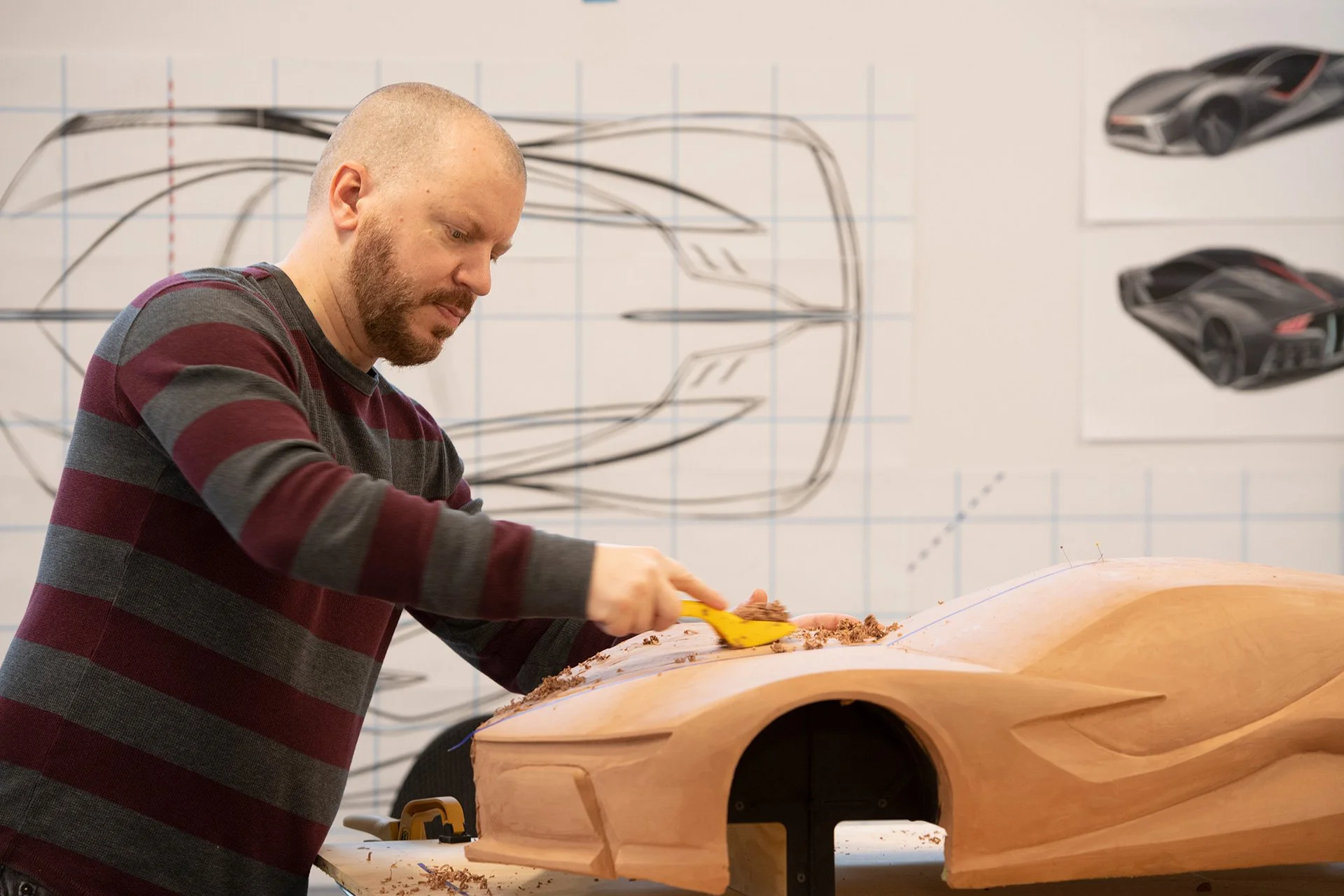
Recent ICC projects demonstrate that combination. In a 2026 transportation-design intensive, students moved from sketches and digital CAD into 3D-printed components, physical clay models, renderings, critiques and final presentations, while simultaneously developing communication, collaboration and creative problem-solving abilities.
Those exact habits transfer to exhibit design:
Imagine it → visualize it → prototype it → experience it → improve it.
AI Is Already Entering the ICC Student Workflow
The integration of emerging technology isn't merely theoretical.
Recent ICC graduate Anna Harmon describes using Vizcom for AI-assisted rendering during an ICC-related design project, moving from sketches and concept exploration into AI-enabled visualization while simultaneously considering physical constraints, manufacturability, presentation and prototyping.
That's a useful picture of what AI should look like in professional design education.
Not:
“Ask AI to design it.”
But:
Designer thinks → designer sketches → AI accelerates exploration → designer evaluates → designer develops → designer makes.
That distinction will become increasingly important as employers look for graduates who understand both traditional creative fundamentals and emerging tools.
From Student Work to Professional Work
ICC's emphasis on professional portfolios gives students opportunities to compete and present alongside other emerging designers.
For example, ICC student Tom Waters was selected through the Columbus-area Industrial Designers Society of America process to compete for a regional Student Merit Award after presenting his professional portfolio alongside students from The Ohio State University and Columbus College of Art & Design.
Other graduates move directly into professional design environments creating spaces for Sonic, LinkedIn's corporate headquarters, BDO, Kia, WaWa, the Ark Encounter, Franklin Park Conservatory, and many more.
The specific job titles may differ.
The underlying preparation is remarkably consistent:
Understand people. Develop ideas. Communicate visually. Make things. Solve problems. Present professionally.
Those are the foundations of experiential design.
Could Exhibit & Experiential Design Be Your Career?
Maybe you're the student who spends more time studying the exhibits in a museum than reading the labels.
Maybe you love theme parks because you wonder how they created the experience.
Maybe you're fascinated by museums, history, science, storytelling or interactive technology.
Maybe you love architecture but also enjoy products, graphics and making things.
Maybe you've built elaborate displays, environments, models or sets without realizing there was an entire profession built around those interests.
Maybe you want a career where no two projects have to look alike.
There is.
At Cedarville University and the International Center for Creativity, you'll build traditional design fundamentals while developing capabilities in human-centered problem-solving, storytelling, visualization, hands-on making, digital technology, professional collaboration and emerging tools such as AI.
You'll begin with the community and energy of a vibrant Christian university.
Then you'll transition into an immersive professional design environment where the emphasis increasingly becomes your skills, your portfolio and your career.